Loading...
First Round of Abstract Submission Ends: Dec 31, 2026
Extended Early Bird Ends: Jun 28, 2026

Keynote Speakers

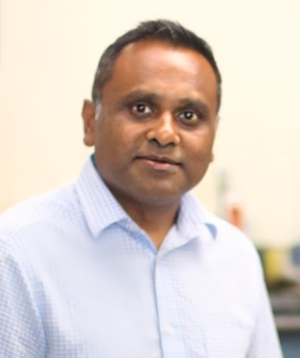
Prof. Manish Chhowalla
University of Cambridge, UK
Title: Ultra-clean interfaces on 2D semiconductors for energy efficient electronics
Professor Manish Chhowalla, FREng is a globally recognized leader in the phase engineering of low-dimensional materials. His pioneering research has reshaped the understanding and application of materials such as atomically thin transition metal dichalcogenides (TMDs), graphene oxide, and diamond-like carbons. Over the course of his career, he has established new research directions, developed novel techniques for realizing electronic and energy devices, and consistently translated scientific discoveries into real-world technologies. His influence is reflected not only in his scholarship, ~ 320 publications in prestigious journals, more than 116,500 citations, and an H-index of 127, but also in his industrial impact, global leadership, and mentorship of the next generation of scientists.
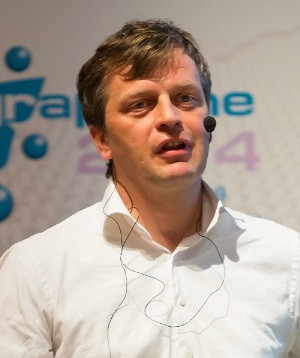
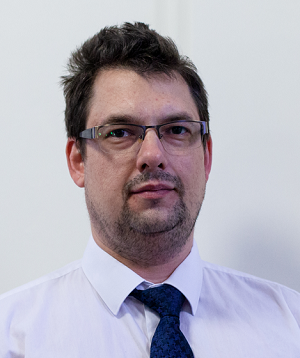
Prof. Georg S. Duesberg
University of the Bundeswehr Munich, Germany
Title: Will Update
Prof. Georg S. Duesberg’s research is the synthesis, processing and characterization of low-dimensional structures. His research focuses on materials such as 2D Transitionsmetaldichalcogenides (TMDs), e.g. PtSe2, and carbon nanostructures. His expertise lies in particular the integration of these materials with silicon technology to create novel hybrid devices such as sensors and NEMS. Georg S. Duesberg graduated in Physical Chemistry from the University of Kassel, Germany in 1996. He researched at Max-Planck-Institute for Solid State Research, Stuttgart (MPI-FKF) and Trinity College Dublin from 1997 – 2001. He gained his PhD at the University of Tübingen, Germany in 2000. From 2001 – 2007 he worked at the Infineon AG, Corporate Research Munich, and the Thin Films Department of Qimonda AG, Dresden. In 2007 Georg S. Duesberg became Principal Investigator at the Irish National Research Institute CRANN and Professor in the School of Chemistry of Trinity College Dublin. Since 2017 Prof. Duesberg has a Chair for Sensortechnologies at the Institute of Physics and is spokesman of the Centre for Integrated Sensors (SENS) at the University of the Bundeswehr Munich. He has co-authored more than 300 publications with more than 50000 citations and has filed 25 patents.
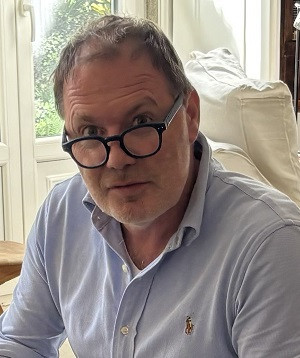
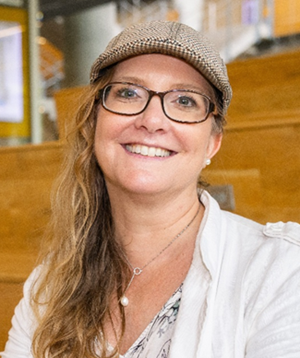
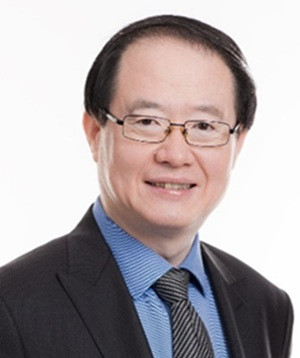
Prof. Christophe COUPEAU
University of Poitiers, France
Title: To be confirmed
Susana Cardoso de Freitas received the Ph.D. degree in Physics by the Instituto Superior Técnico, Universidade de Lisboa and INESC–MN in 2002. In 2002 she was a Co-Op Pre-Professional Engineer at the IBM T. J. Watson Research Center (USA), and then became a researcher at INESC-MN, where she is currently the leader of the Spintronics and Magnetic Biosensors Group and manages several technology-transfer contracts with industry worldwide related to sensors, leading a team of 16 contracted engineers/researchers and 20 students. In 2018 she was selected as one of the 100 Portuguese “Women in Science”. As a Full Professor in the Physics Department at Instituto Superior Tecnico, Lisboa, she is responsible for student coordination and advanced training in microfabrication and spintronics. She is a co-author of more than 320 articles, 25 book chapters and five patents. She is an Associate Member Delegate to the European Physics Society (EPS) Council since 2019. She was a IEEE Distinguished Lecturer in 2023.
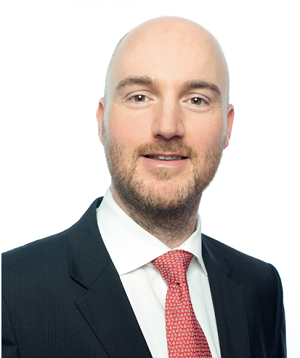
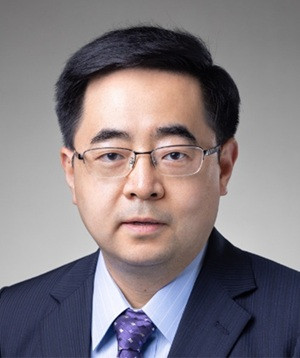
Prof. Chulsung Bae
Rensselaer Polytechnic Institute, NY, USA
Title: Molecular Engineering of Ion-Conducting Polymers for Clean Energy Technologies
Chulsung Bae is Ford Foundation Professor at Department of Chemistry & Chemical Biology, Rensselaer Polytechnic Institute. Broadly speaking, Bae's research group focuses on development of functional polymeric materials that can find applications in the areas of clean energy technologies, using synthetic organic chemistry as a tool. Specific examples of projects include novel ion conducting polymers that can be used as a key component in next generation energy conversion and storage technologies, such as fuel cells, water electrolyzers, and redox flow battery, and functional polymer membranes that can play a crucial role in energy efficient separation process. He received BS in Polymer Science & Engineering at Inha University, MS in Materials Science at POSTECH, MS in Chemistry at University of Massachusetts at Lowell, and Ph.D. in Chemistry at University of Southern California under the guidance of Surya Prakash and Nobel Laureate George A. Olah. He conducted postdoctoral research with John F. Hartwig at Yale University before starting independent academic career in 2004. In 2012 Bae relocated his research group to Rensselaer Polytechnic Institute.
Prof. Agnieszka Kuc
Helmholtz-Zentrum Dresden-Rossendorf, Germany
Title: Simulations of Electronic Structure and Interfaces in Low-Dimensional Materials
Agnieszka Kuc graduated from Wroclaw University in 2003 with an M.Sc. in physical chemistry (supervisors: Prof. Koll and Dr. Filarowski). She completed her Ph.D. in chemistry under the supervision of Prof. Gotthard Seifert at TU Dresden in 2008. She habilitated in Physics in 2018 under mentoring of Prof. Thomas Heine at Jacobs University Bremen. She is currently working as a group leader at Center for Advanced Systems Understanding, institute of Helmholtz-Zentrum Dresden-Rossendorf. Her research interests include, among others, electronic structure simulations and vibrational properties of 2D inorganic and hybrid materials, such as transition-metal dichalcogenides, conjugated polymers, metal- and covalent organic frameworks, and perovskites.
Prof. Dominic Bresser
Karlsruhe Institute of Technology, Germany
Title: To be confirmed.
Dominic Bresser is currently serving as full professor at Ulm University (UUlm) and Karlsruhe Institute of Technology (KIT), and as department head and principal investigator at the Helmholtz Institute Ulm (HIU) in Germany. His research focuses on the development of advanced lithium and sodium batteries. In addition to his role at UUlm, KIT and HIU, he is serving as editor-in-chief for the Journal of Power Sources Advances (Elsevier). Amongst others, he has been awarded with the Carus Medal for his scientific achievements by the German National Academy of Sciences Leopoldina, the Carus Award by the city of Schweinfurt, Germany, and an ERC Starting Grant by the European Research Council. He has co-authored more than 200 peer-reviewed publications, 1 book, 5 book chapters, 23 patents, and given more than 100 presentations at international conferences, including 80 plenary, keynote, and invited talks.
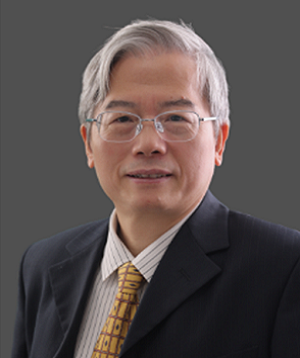
Prof. Sofer Zdenek
University of Chemistry and Technology Prague, Czech Republic
Title:

2D Materials from MXene to Xene

Prof. Zdenek Sofer is a tenured professor at the University of Chemistry and Technology Prague in the Czech Republic since 2019. He earned his PhD at the University of Chemistry and Technology Prague, Czech Republic, in 2008. During his doctoral studies, he spent one year at Forschungszentrum Julich and completed a postdoctoral stay at the University of Duisburg-Essen, Germany. Prof. Sofer's research interests focus on 2D materials, including crystal growth, chemical modifications, and derivatization. His research spans various applications of 2D materials, such as energy storage and conversion, electronics, catalysis, and sensing devices. Prof. Sofer has received several awards. He has authored over 700 articles, which have garnered over 40 000 citations (with an h-index of 102).