Loading...
First Round of Abstract Submission Ends: Dec 31, 2026
Extended Early Bird Ends: Jul 31, 2026

Plenary Speakers

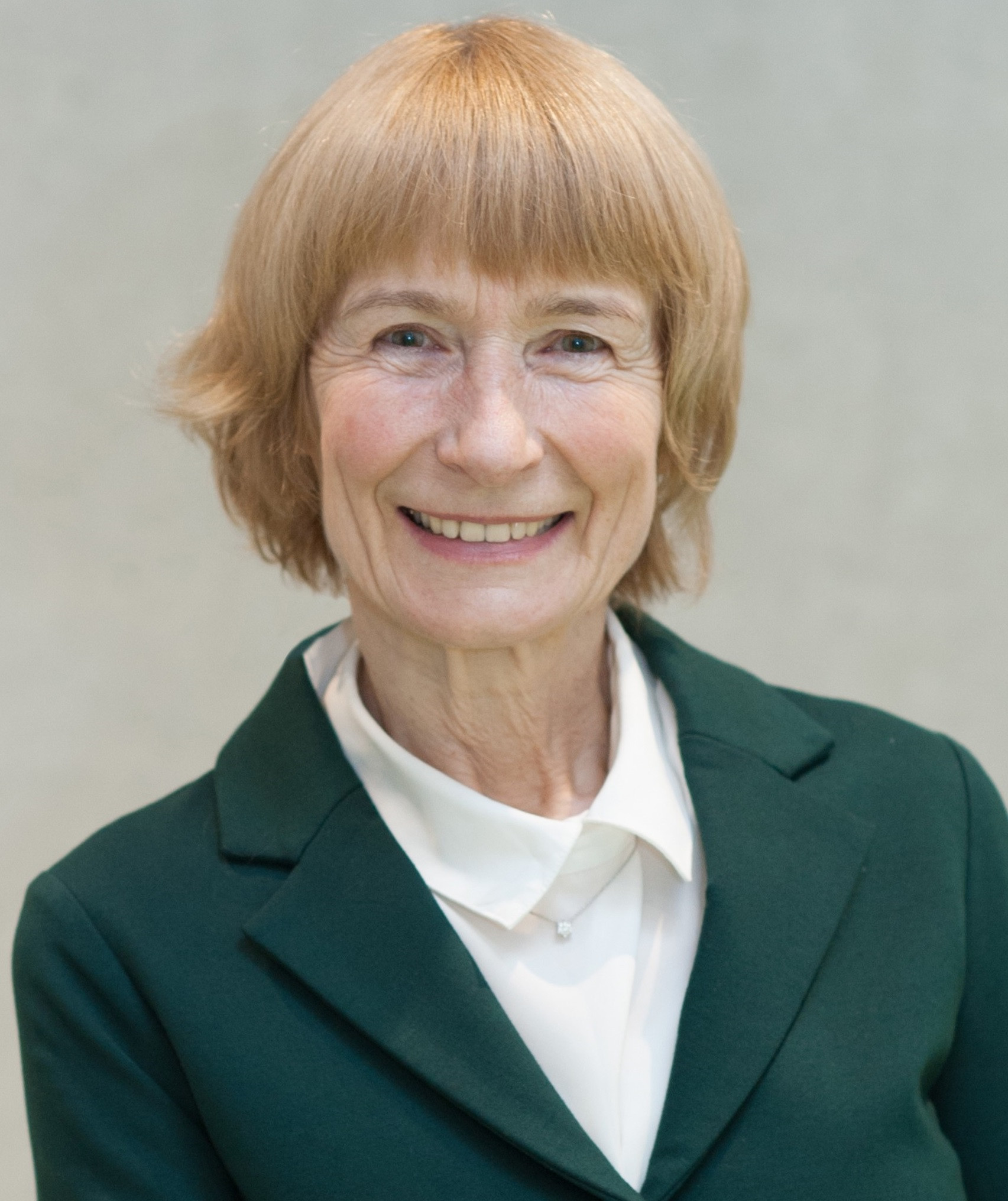
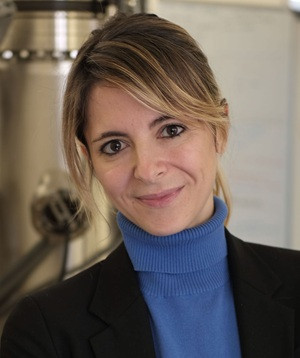
Prof. Ute Kaiser
Ulm University, Germany
Title: "Seeing" Functional Materials at the Atomic Scale: The Evolving Role of Advanced Electron Microscopy
Ute Kaiser is Senior Professor at Ulm University in the Institute for Quantum Optics and was from 2004- 2023 Head of Ulm University’s Central Facility of Materials Science Electron Microscopy. She graduated from Humboldt University Berlin, received her PhD in 1993 and her habilitation on “TEM on semiconductor quantum materials” in 2002. From 1993-2004 she was postdoc at Jena University, with extended visits at Bell Labs, Cambridge University and in Tohoku University. From 2009-2018 she was the director of the Sub-Angstrom Low-Voltage Electron Microscopy project, where she focuses on developments of low-voltage electron microscopy for application on beam-sensitive low-dimensional materials. Ute Kaiser has more than 400 publications, was 2018 „highly cited researcher“, is a frequently asked invited speaker at conferences and holds several honorary adjunct positions. Since 2021 she is the PhysicalSciences Editor for Micron.
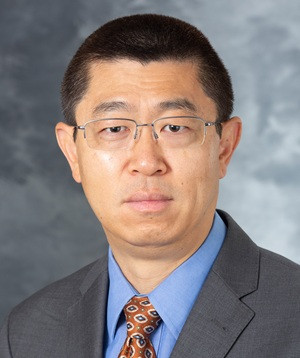
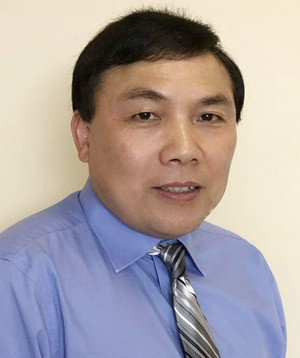
Prof. Weibo Cai
University of Wisconsin – Madison, USA
Title: Theranostics with Radiolabeled Nanomaterials
Weibo Cai is a Vilas Distinguished Achievement Professor of Radiology, Medical Physics, Materials Science & Engineering, and Pharmaceutical Sciences at the University of Wisconsin - Madison. He received a BS degree in Chemistry from Nanjing University, China (1995) and a PhD degree in Chemistry from the University of California San Diego (2004). Between 2005 and 2008, Dr. Cai did his post-doctoral research in the Molecular Imaging Program at Stanford University. In February 2008, Dr. Cai joined the University of Wisconsin - Madison as a Biomedical Engineering Cluster Hire, and was promoted to Associate Professor with Tenure in 2014, and Full Professor in 2018. Dr. Cai’s research at UW-Madison (http://mi.wisc.edu) is primarily focused on molecular imaging and nanobiotechnology.

Dr. Cai has authored >450 peer-reviewed articles (total citation: ~50,000 times; h-index: 115), edited 3 books, and given > 400 talks. Dr. Cai has received many awards, including the European Association of Nuclear Medicine (EANM) Springer Prize (2011 & 2013), American Cancer Society Research Scholar (2013), EANM Annual Congress Plenary Lecturer (2016), Inaugural Nano Research Young Innovators (NR45) in Nanobiotechnology Award (2018), Fellow of American Institute for Medical and Biological Engineering (AIMBE, 2018), Highly Cited Researchers from Clarivate Analytics (Cross-Field, 2018), Fellow of the Society of Nuclear Medicine and Molecular Imaging (SNMMI, 2019), #1-Rated Expert in Molecular Imaging Worldwide by Expertscape Inc. (2020-present), Stanford University's List of "World's Top 2%" Scientists (2020-present), Fellow of Royal Society of Chemistry (RSC, 2021), SNMMI Radiopharmaceutical Sciences Council’s Michael J. Welch Award (2022), Journal of Nanobiotechnology (JNB) Trailblazer Award (BMC/Springer Nature, 2022), Fellow of American Association for the Advancement of Science (AAAS, 2024), Fellow of Royal Society of Biology (RSB, 2025), AIMBE Professional Impact Award for Mentoring (2025), among many others.

Dr. Cai has served on the Editorial Board of >30 scientific journals (e.g. Theranostics, Journal of Nuclear Medicine, European Journal of Nuclear Medicine and Molecular Imaging, Molecular Pharmaceutics, Bioconjugate Chemistry, American Journal of Cancer Research, American Journal of Translational Research, Exploration, etc.), and participated in many grant review panels (NIH, DOD, NSF, American Cancer Society, Cancer Prevention and Research Institute of Texas [CPRIT], Susan G. Komen, European Research Council, Canadian Cancer Society, Prostate Cancer Canada, many European countries, etc.). He is currently the Editor-in-Chief of Journal of Nanobiotechnology (JNB, https://jnanobiotechnology.biomedcentral.com, impact factor 12.6), and Associate Editor of the EANM Journal (official journal of the European Association of Nuclear Medicine [EANM]).

Dr. Cai is an active member of several scientific societies, and he has served on various committees in these societies such as SNMMI Committee on Awards, SNMMI Committee on Scientific Program, SNMMI House of Delegates, SNMMI Radiopharmaceutical Sciences Council (Past President), etc. What Dr. Cai is most proud of is that his trainees at UW - Madison have received >160 awards to date, such as the 2012 Berson-Yalow Award from SNMMI, multiple Young Investigator Awards from SNMMI, several post-doctoral fellowships, among others. To date, more than 15 of Dr. Cai’s trainees have started independent research groups at world-class universities (e.g. UW-Madison, Seoul National University, Purdue University, University of Utah, Michigan State University, Zhejiang University, Shanghai Jiao Tong University, Nanjing University, Huazhong University of Science and Technology, Tongji University, Rutgers, etc.).

Dr. Cai has served various roles (e.g. consultant, collaborator, scientific advisor, chief scientific officer) for several industrial corporations. He has served on the Scientific Advisory Board of Focus-X Therapeutics, Inc. (a preclinical biotechnology company in New Jersey, founded in 2020 for development of radiopharmaceuticals), which was acquired by Full-Life Technologies (a Cayman company operated in China and Europe) for more than $200M in 2023.
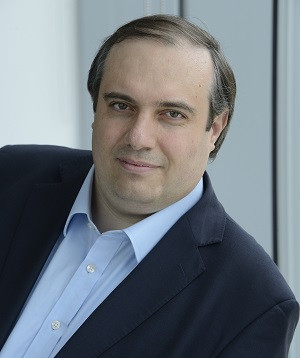
Prof. Andrea C. Ferrari
University of Cambridge, UK
Title: To be confirmed.
Andrea C. Ferrari earned a PhD in electrical engineering from Cambridge University, after a Laurea in nuclear engineering from Politecnico di Milano, Italy. He is Professor of nanotechnology and Professorial Fellow of Pembroke College. He founded and directs the Cambridge Graphene Centre and the EPSRC Centre for Doctoral Training in Graphene Technology. He chairs the management panel and is the Science and Technology Officer of the European Graphene Flagship. He is a Fellow of the American Physical Society, Fellow of the Materials Research Society, Fellow of the Institute of Physics, Fellow of the Optical Society and he has been recipient of numerous awards, such as the Royal Society Brian Mercer Award for Innovation, the Royal Society Wolfson Research Merit Award, the Marie Curie Excellence Award, the Philip Leverhulme Prize, The EU-40 Materials Prize. He also received 4 European Research Council Grants.
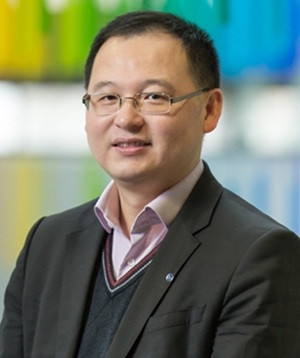
Prof. Xinliang Feng
Technical University Dresden, Germany
Title: Organic 2D Crystals for Electronics and Quantum Materials
Prof. Feng is a director of the Max Planck Institute of Microstructure Physics and the head of the Chair of Molecular Functional Materials at Technische Universität Dresden. His current scientific interests include synthetic methodology for new-type of polymers, organic and polymer synthesis, interfacial chemistry, supramolecular chemistry of π-conjugated system, bottom-up synthesis of carbon nanostructures and graphene nanoribbons, organic 2D crystals including 2D (supramolecular) polymers, 2D conjugated polymers and 2D conjugated metal-organic frameworks for opto-electronics, spintronics, molecular quantum and computing devices, electrochemical exfoliation of 2D crystals, graphene and 2D materials for energy storage and conversion, new energy devices and technologies. He has published >800 research articles which have attracted >137000 citations with H-index of 187 (Google Scholar).

He has been awarded several prestigious prizes such as IUPAC Prize for Young Chemists (2009), European Research Council (ERC) Starting Grant Award (2012), Journal of Materials Chemistry Lectureship Award (2013), ChemComm Emerging Investigator Lectureship (2014), Fellow of the Royal Society of Chemistry (FRSC, 2014), Highly Cited Researcher (Thomson Reuters, 2014-2025), Small Young Innovator Award (2017), Hamburg Science Award (2017), EU-40 Materials Prize (2018), ERC Consolidator Grant Award (2018), ERC Synergy Grant Award (2024), Graphene Honorary Award (2025). He is an elected member of the European Academy of Sciences (2019), member of the Academia Europaea (2019), member of the German Academy of Science and Engineering (acatech, 2021), and member of the German Academy of Sciences (Leopoldina, 2024). He is an Advisory Board Member for Advanced Materials, Chemical Science, Journal of Materials Chemistry A, Energy Storage Materials, Chemistry -An Asian Journal, ChemNanoMat, etc.
Prof. Camilla Coletti
Istituto Italiano di Tecnologia, Italy
Title: Scalable Growth and Engineering of High-Quality 2D Quantum Materials
Camilla Coletti is a tenured Senior Scientist of the Istituto Italiano di Tecnologia (IIT) and principal investigator of the research line 2D Materials Engineering: She is the coordinator of the Center for Nanotechnology Innovation (CNI@NEST) of Pisa and she has been coordinator of the Graphene Labs (2020-2025). She has been hired by IIT in 2011 after being an Alexander von Humboldt postdoctoral fellow at the Max Planck Institute for Solid State Research of Stuttgart (Germany). She received her PhD degree from the University of South Florida in 2007 and her MS degree from the University of Perugia in 2004 (with honors, both in Electrical Engineering). She is expert in the synthesis of highly-crystalline 2D materials via chemical vapour deposition (CVD) and in the investigation of their electronic, chemical and structural properties. Her research is focused on: (i) synthesis and integration of scalable 2D materials for electronics, photonics and quantum technologies; (ii) engineering the interface and properties of 2D heterostructures. In her work she applies her background of surface scientist to impact science and technology of 2D materials. Over the years, within IIT, she has directly supervised over 70 students and postdocs, with a great attention in creating an international and gender fair environment. She has received funding for more than 6.5 M€ from competitive grants and industrial contracts. Since 2020 she is Faculty Board Member for the PhD in Nanoscience at the Scuola Normale Superiore (SNS) of Pisa and throughout the years she has been a lecturer for courses at the Master’s and PhD level. Overall, she is author of more than 200 peer-reviewed publications, authored 4 book chapters, edited 1 book, filed several international patents (holds 3) and delivered more than 70 invited talks at international conferences.
Prof. Yun Hang Hu
Michigan Technological University, USA
Title: Nanomaterials and Superstructured Materials for Energy Devices
Prof. Yun Hang Hu holds the most prestigious title of University Professor and is the Charles and Carroll McArthur Endowed Chair Professor at Michigan Technological University. He is a Fellow of the Canadian Academy of Engineering (CAE) and the fellows of six major scientific societies (AAAS, ACS, APS, AIChE, ASM International, and RSC). He is the Editor-in-Chief of Energy Science & Engineering (a Wiley journal) and serves on the editorial advisory boards of 10 journals published by leading publishers (Nature group, Wiley, Elsevier, Springe, ACS, and RSC). Prof. Hu has published over 320 papers in prestigious journals and delivered more than 200 invited talks, including over 70 plenary or keynote presentations. He has received over 20 national and international honors and awards. Prof. Hu’s research focuses on nanomaterials and superstructured materials for sustainable energy and environment, energy devices (such as solar cells, batteries, supercapacitors, and fuel cells), catalysis (including thermal catalysis, photocatalysis, and thermo-photocatalysis), hydrogen production and storage, CO₂ and methane conversion, and the transformation of waste into valuable materials.
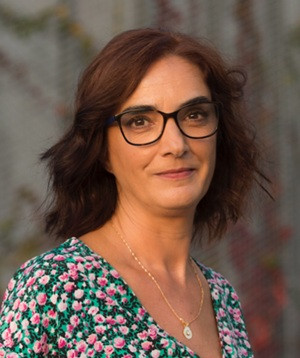
Prof. Elvira Fortunato
i3N/CENIMAT, NOVA University Lisbon, Portugal
Title: Materials and Technologies for Sustainable Electronics
Elvira Fortunato has a career marked by scientific, academic, and political leadership, with recognized impact at both national and international levels. With a PhD in Microelectronics, she is a pioneer in transparent electronics and the inventor of the first paper transistor, currently the most cited researcher at NOVA University Lisbon.

In the scientific domain, she directed the i3N Associated Laboratory, a European reference in advanced materials, sustainable electronics, and nanotechnology, which has secured twelve ERC grants, hundreds of international projects, and dozens of patents. Under her leadership, i3N became Portugal’s leading institute in Advanced Materials Science and Engineering and Nanotechnology, pioneering the creation of the country’s first PhD program in Nanoscience and Nanotechnology. Beyond her scientific impact, she is an active advocate for scientific education as a driver of social and economic development, promoting STEM areas, gender equality, and the training of new generations of scientists. She regularly participates in international conferences, forums, and science outreach initiatives, affirming science as a tool for inclusion, accessibility, and sustainability. Her vision integrates research, innovation, science policy, and civic engagement, resulting in a career of real, transformative, and lasting impact on society.

With over 1,000 scientific publications, 5 books, 31 book chapters, and 10 edited volumes, her work has been cited more than 44,500 times with an H-index of 104 (GS). She has participated in over 530 international conferences, delivering 167 keynote and plenary lectures.

Research focused on advanced multifunctional materials and metal-oxide semiconductors for sustainable large-area and flexible electronics. Pioneer of transparent thin-film transistors, including the first room-temperature-processed TFT compatible with low-cost substrates (paper and plastic), establishing a global reference adopted by industry. Inventor of the paper transistor (2008), a disruptive silicon-free technology enabling sustainable applications in sensing, RFID and smart packaging. Coordinator of two ERC Advanced Grants (INVISIBLE, DIGISMART), with INVISIBLE recognized as an ERC Success Story and awarded the European Commission Horizon Impact Award (2020).

Over her career, she has participated in 205 research projects, 96 national (including 12 under the PRR), 76 European (10 ERC grants, coordinating 3: INVISIBLE, DIGISMART, e-GREEN), 13 industry-funded projects, and 6 major scientific infrastructure projects. She co-founded the CENIMAT laboratory, now part of i3N, and launched NANOVA, an advanced nanocaracterization laboratory. Her total research funding exceeds €78.5M, having served as Principal Investigator or Co-PI in 62 projects.

Elvira Fortunato holds 95 international patents (WIPO-PCT), resulting from decades of innovative applied research and strong collaboration with industry. These patents cover transparent and sustainable electronics, sensors, and thin-film transistors, translating directly into market-ready technologies.
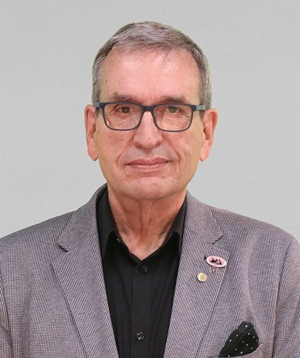
Prof. Rodrigo Martins
i3N/CENIMAT, NOVA University Lisbon, Portugal
Title: The Rise of Sustainable Advanced Materials for Electronics and Energy Applications.
Actual Positions: Full Professor at NOVA-FCT in Advanced Functional Materials; running director of i3N; CENIMAT|i3N (https://www.cenimat.fct.unl.pt/) and CEMOP/UNINOVA, (https://cemop.uninova.pt/pt-pt), President of European Academy of Sciences - EurASc; President of the administration board of the Portuguese cluster in Advanced Materials (NANOMAT); member of the: administration board of the Portuguese cluster on Batteries (BatPower); committee of King Jaume I award for Basic Research ( https://fprj.es/en/awards/); coordination board of the Sino-Portugal joint centre in Advanced Materials. Chair of the European Committee Affairs of European Materials Research Society (E-MRS), member of the Portuguese Engineering Academy, Royal Academy of Sciences and Arts of Barcelona and of Academia Europaea; editor in chief of the journal Discover Materials.

Co-chair of the FNRS (Fonds de la Recherche Scientifique, Belgium) Quinquennial Scientific Prize, A DE LEEUW-DAMRYBOURLART Prize in Applied Exact Sciences. Coordinator of the EuMAT working group on Advanced Materials Academy Member of the jury Rei Jaume I Prize in New Technologies for 2025, Valencia 2-3 June, Spain. Co-Chair of the Organizing Committee for IUMRS-ICA 2025, the 9th World Materials Summit and International Union of Materials Societies International Conference in Asia Guilin, 14-17 October 2025. Member of the International Committee of ITC2025, Nara Japan, March, 24-26 2025. Member of the advisory board (2025-2027) of the European University for Customized Education (EUNICE),.

Academic career: R. Martins got in 1974 the Honours degree in Electronics Engineering by U. Luanda. In 1977 he got the MSc degree in Semiconductor Materials, by U. of Dundee, Scotland, supervised by W. Spear, the 1977 Euro physicist award; in 1982, the Ph.D. in Energy conversion and Semiconductors, by New University of Lisbon (UNL); in 1988 the Aggregation in Semiconductor Materials and Microelectronics, by UNL. Full Professor at FCT-NOVA since 2002 in Materials Engineering, speciality Materials for Energy, Microelectronics and Nanotechnologies. Professor Honoris Causa by University of Galati, Romania, 2012.

Former Positions: Director of the Materials Science Department of FCT-NOVA; Member of the scientific council of FCTNOVA, President of International Union of Materials Research Society; Member of the Scientific Council of the European Research Council; president of the E-MRS; President of the senate of E-MRS; member of the qualification board of Engineering Association.

Key activities taken in Europe, close to EC and to Regions, contributor of the Paper Electronics, Responsible Electronics and Advanced Materials for Industrial Leadership programmes and of the Materials Manifesto 2030. Mentor of Advanced Materials Academy launched by the EC in 2024 and member of EIT, CLC Central. As far as regions are concerned, he promoted the creation of the Portuguese Materials cluster association, named NANOMAT (Association for Research and Development in Advanced Materials and applications, involving regional authorities and regional municipalities (14), Industry (10), SME (5), Universities (8), RTO (7) and Colab (1)), bringing together Municipalities, regions, industry and academy).

Key activities in China: QiuShi Chair Visiting Professor at Zhejiang University; Honorary Professor of Hefei Institutes of Physical Sciences of the Chinese Academy of Sciences (CAS); Honorary Professor of the Technical University of Wuhan; Professor of the School Chemistry, Chemical Engineering and Life Sciences of Wuhan University; Honorary Professor of Fuzhou University; Invited Professor at Southwest University, Chongqing. Coordinator of the Sino-Europe Display Materials Joint Laboratory, Hefei 4th July 2024. Chief Scientist of the International Joint Laboratory on Near-Zero-Carbon Materials in Wuhan, 2025 and coordinator and founder of the Asia Pacific EURASC hub in Hefei, 2025, with the support of the CAS.

Publishing activities: He is Editor in Chief of the Journal Materials Discover, from Nature-Springer. (https://discovermaterials.co.uk/). Member of the: international advisory board of Advanced Electronics Materials and of the Journal of Physics D; Editor board of the Responsive Materials Journal and of the editorial board of the journal Innovation Material (2025-2027) and editor of the Journal Iontronics.

Fields of expertise: advanced functional materials; nanotechnologies, microelectronics, transparent electronics (pioneer) and paper electronics (inventor), with more than 1375 papers published, holding an h factor of 106, with more than 45500 citations (Google). Author in 5 books and 31 book chapters and editor in 8 books. He gave so far 170 plenary talks; 265 invited talks; 112 oral presentations and 95 posters, in conferences and workshops.

Patents, awards, and honours: 197 international patents conceived (WIPO-PCT), (https://patentscope.wipo.int/search/en/result.jsf?_vid=P11-M9JRY4-74105) 12 are trademark register and have 12 pending patents.

Awarded with the Chinese Government Friendship award 2025; decorated with the gold medal of merit and distinction by the Almada Municipality for his R&D achievements, in 2016; in 2021 he got the Career and Recognition Award given by the Portuguese Society of Materials and Research Nova-Altice Scientific Merit Award, in his first edition. In 2023 selected as PIFI Distinguished Scientist of CAS, the highest honour for overseas talents. Besides that, he got more than 18 international and national prizes and distinctions for his work.

Involvement in Research Projects: 211 projects (97 are national), coordinated 64, responsible in 72, co-responsible in 5 and active member in 64, involving total budget of 84,315,787.70€.
Prof. Claudia Draxl
Humboldt University of Berlin, Germany
Title: FAIR enough? - AI in materials science
Claudia Draxl is Einstein Professor at the Humboldt-Universität zu Berlin. Her research interests cover theoretical concepts and methodology to gain insight into a variety of materials and their properties. She is developer of the all-electron full-potential package exciting, implementing density-functional theory (DFT) and methods beyond, with a focus on theoretical spectroscopy. A recently devloped package is the cluster-expansion code CELL. Actual research projects concern organic/inorganic hybrid structures, wide-gap oxides, thermoelectricity, solar-cell materials, film growth, excitation dynamics, and more. She is the chairperson of of the consortium FAIRmat (https://fair-di.eu/fairmat), which develops NOMAD, an open-access library of materials data (Novel Materials Discovery, https://nomad-lab.eu), covering materials synthesis, experimental techniques, and computational approaches. Based on this, her data-driven research aims at finding structure in Big Data of materials science.
Prof. Elena Besley
University of Nottingham, UK
Title: Role of computation in the understanding, prediction, and design of two-dimensional materials
Elena Besley, FRSC, is Professor of Theoretical and Computational Chemistry at the University of Nottingham, United Kingdom.

Besley holds a PhD in Physics and Mathematics (2000) from St. Petersburg State University, Russia. She had postdoctoral research appointments in Chemistry at the Universities of Nottingham, Sussex, and Cambridge (2000-2007) and a number of competitive research fellowships such as visiting research fellowship, Australian National University (2007), EPSRC Career Acceleration Fellowship (2008-2013), ERC Consolidator Grant (2013-2018), Royal Society Leverhulme Trust Senior Research Fellowship (2021-2022), Royal Society Wolfson Fellowship (2020-2024). Elena was appointed as Lecturer in Theoretical and Computational Chemistry (2011-2014), promoted to Associate Professor (2014-2015) and Professor of Theoretical and Computational Chemistry (2015) at the University of Nottingham.

Besley’s theoretical and computational work has made a broad impact across multiple and diverse disciplines in chemical sciences. She has developed theoretical methods which transformed our fundamental understanding of electrostatic phenomena in the gas phase, plasmas, and solvents. Her pioneering modelling studies of electron- and ion-beam induced irradiation of nanostructures significantly aided the advancement of state-of-the-art imaging techniques. Further notable research achievements include effective computational solutions to gas storage and the control of chemical hierarchy, reactivity, and interactions within designer porous materials, and advances in fundamental understanding of the complex patterns in packing of elastically deformable nanomaterials and their adsorption on surfaces.

Prof. E. Besley received numerous recognitions including Outstanding Female Scientist and Scholar “AcademiaNet: Profiles of Leading Women Scientists” (2013-2025), EPSRC Research Leaders Award (2012-2014), Lifetime Achievement Award from the Electrostatics Society of America (2024), Royal Society Yusuf Hamied Visiting Fellowship to India (2025). Her profile was included in the new feature “Physical Chemistry: People and Perspectives” of the 12th edition of Atkins’ Physical Chemistry textbook (2023).

Elena Besley is Associate Editor of Nano Letters (2021 - present).
Prof. Raynald Gauvin
McGill University, Canada
Title: Electron Microanalysis Across Length Scales
Pr. Raynald Gauvin received his Ph.D. in 1990 at École Polytechnique de Montréal in Metallurgical Engineering. He was then appointed as an assistant professor in Mechanical Engineering at Sherbrooke University where he became associate Professor in 1995 and full Professor in 1998. In 2001, he joined the department of Mining and Materials Engineering of McGill University, Montréal, Canada, as a full Professor. Pr. Gauvin’s research interest are related in developing new methods to characterize the microstructure of materials using high resolution scanning electron microscopy with x-ray microanalysis and Monte Carlo simulations. He has more than 200 papers in scientific journals and conference proceedings. He was Invited Speaker in more than 80 international scientific conferences. He won several scientific prices, most notably the 31st Canadian Materials Physics Medal in 2007 by the Metallurgical Society of the Canadian Institute of Mining, the Heinrich Award in 1997 from the Microbeam Analysis Society of America and the Prix d'excellence du président de l’École for the best Doctorate Thesis defended in 1990 at École Polytechnique de Montréal. Pr. Gauvin is currently the President of the Inter American Societies of Electron Microscopy (CIASEM). He was President of the Microbeam Analysis Society of America (MAS) from 2005 to 2006, President of the Microscopical Society of Canada (SMC) from 2001 to 2003 and President of the International Union of the Microbeam Analysis Societies (IUMAS) from 2000 to 2005.